 Business License

Purchaser of Middle-East Risk Prevention list
Part 1: Middle East Purchaser Logistics Full Risk Prevention Checklist
This checklist is tailored for Middle East importers, covering pre-shipment, in-transit, customs clearance, after-arrival and emergency response links to avoid extra costs, cargo detention and delivery delay losses.
1. Pre-Shipment Risk Prevention (Core Link)
1. Route & Carrier Risk Assessment
• Avoid single dependence on Red Sea and Hormuz Strait fixed routes; preset alternative ports (Salalah Port, Khalifa Port) and diversion routes.
• Screen qualified shipping lines and airlines, eliminate forwarders with opaque quotations and false direct-flight commitments.
• Check real-time geopolitical risk alerts of destination countries (Iraq, Yemen, Gulf hot spots) before arranging shipment.
2. Cost & Contract Risk Control
• Sign fixed-price or floating-price clauses with clear upper limits in contracts, explicitly stipulate the liability party of war surcharge, emergency fuel surcharge and port miscellaneous fees.
• Prohibit verbal agreements; write down delay compensation, cargo damage compensation and roll cargo liability rules in formal purchasing and logistics contracts.
• Make advance budget for peak seasons (Ramadan, Hajj) to avoid sudden freight surge cost overruns.
3. Document & Compliance Pre-Check
• Complete all mandatory certifications in advance: Saudi SABER, GCC certification, country-specific certificate of origin, and official commercial invoice.
• Check cargo labels, packaging marks and battery/chemical goods compliance standards one by one to avoid customs inspection and detention.
• Pre-review document consistency (product name, quantity, HS code) to eliminate minor discrepancies that lead to fines.
4. Order & Cargo Planning Optimization
• Adopt the strategy of small batch and multiple shipments for high-value and fast-selling goods to reduce full-container loss risk caused by route interruption.
• Classify cargo by urgency: separate emergency orders, conventional orders and stock orders to match different transportation modes.
2. In-Transit Risk Prevention
1. Real-Time Cargo Tracking
• Require forwarders to provide daily voyage/flight update reports, focusing on vessel diversion, port congestion and flight adjustment information.
• Monitor container demurrage and port storage time in advance to avoid overdue penalty fees.
2. Insurance Risk Hedging
• Upgrade cargo insurance coverage, add war risk and strike risk insurance for Middle East routes.
• Confirm the insurance effective time and compensation scope to ensure full coverage of transit, port waiting and transshipment links.
3. Emergency Early Warning
• Once encountering ship roll, route diversion or port closure, adjust downstream sales and inventory plans in time to avoid stock-out losses.
3. Customs Clearance & Port Arrival Risk Prevention
1. Customs Clearance Risk Control
• Cooperate with local formal customs brokers to conduct pre-clearance document audit, reduce manual inspection probability.
• Master the customs policy differences of Gulf countries, avoid seasonal policy adjustment risks (summer temperature control supervision, holiday inspection tightening).
2. Port & Warehousing Risk
• Arrange pick-up and delivery within the free demurrage period to avoid high port storage fees and container detention fees.
• For remote inland destinations, pre-book stable local trucking resources to prevent inland delivery delay and cargo damage.
4. Post-Delivery After-Sales & Risk Summary
1. Keep complete logistics documents (bill of lading, insurance policy, fee bill, customs clearance record) for subsequent claim and cost reconciliation.
• Record all extra fees and delay causes of each shipment, form enterprise logistics risk database, and optimize long-term shipping plan.
Part 2: Advantage & Disadvantage Comparison of Main International Transportation Modes for Middle East Market
Table 1 Sea Freight / Air Freight / Intermodal Transport SWOT Comparison
Transport Mode Advantages Disadvantages Applicable Scenarios for Purchasers Core Risks
Sea Freight (Mainstream) 1. Low unit freight cost, suitable for large-batch
2. Stable cargo damage rate, suitable for long-cycle stock replenishment
3. Mature port service in Gulf core cities with low operation difficulty. 1. Long transit time, easily affected by Red Sea geopolit
2. Frequent temporary surcharges with poor cost controllability;
3. Port congestion and container roll risks in peak
4. Long delay cycle once accidents occur. Bulk building materials, daily necessities, mechanical equipment, low-value durable goods, conventional inventory orders Route diversion delay, sudden surcharge, port detention, container demurrage
Air Freight (High-Efficiency) 1. Ultra-short transit time, strong delivery stability;
2. Few intermediate links, low cargo loss rate
3. Not easily affected by maritime geopolitical conflicts. 1. High freight cost, unsuitable for low
2. Tight capacity in peak seasons with obvious price fluctuation;
3. Strict air security inspection and high compliance threshold
4. Limited loading volume Electronic accessories, medical supplies, emergency replenishment orders, high-end consumer goods, sample goods Airspace restriction flight cancellation, document non-compliance detention, peak capacity shortage
Sea-Air / Sea-Land Intermodal Transport (Emerging Alternative) 1. Balance cost and timeliness, flexible
2. Avoid single maritime channel risk, strong anti-risk ability;
3. More stable delivery than pure sea freight, lower cost than pure air freight 1. Long logistics chain with multiple service providers and ambiguous
2. High overall operation and management costs
3. Unstable inland trucking capacity in Saudi Arabia and remote areas;
4. Difficult full-lifecycle cargo tracking Semi-urgent industrial supplies, medium-value batch goods, orders affected by maritime risks Link disconnection, handover error, inland cargo damage, difficult responsibility confirmation for delays
Table 3 Regional Logistics Advantage & Disadvantage Comparison (Core Middle East Import Regions)
Destination Area Logistics Advantages Logistics Disadvantages Purchaser Operation Suggestions
UAE (Dubai/Abu Dhabi) Complete port/airport infrastructure, high customs clearance efficiency, transparent logistics market, perfect end-to-end service Numerous forwarders with mixed service quality, high peak freight, severe port congestion in busy seasons Prioritize direct flights/ships, avoid peak seasons, select large formal logistics providers
Saudi Arabia (Jeddah/Dammam) Land bridge transportation supports Gulf cross-border delivery, stable policy orientation (Vision 2030) Strict SABER compliance certification, high document inspection rate, insufficient inland logistics capacity Complete document pre-audit in advance, reserve inland truck resources
Qatar / Kuwait / Bahrain Low port congestion rate, stable local policy Small port scale, limited shipping capacity, single transportation route Adopt small-batch multi-time shipment, reserve transshipment ports
Iraq / Yemen / Remote Areas Low logistics competition cost Severe route risk, imperfect inland distribution, high cargo damage rate, slow customs clearance Choose insured intermodal transport, avoid large-batch high-value goods shipment
Recently Posted
-
Ocean Freight Forecast: Shenzhen (Yantian / Shekou) to the Middle East of September
September 17, 2026Current spot rate range of mid‑September for ShenzhenTransit time: Direct se rvice 15‑19 days; Cape of Good Hope reroute 26‑32 day Read More
 -
How important The Multiple of Logistics way to adapt your every order
September 10, 2026When it comes to cross‑border trade, persistent pain points include poor shipment adaptability, inflexible transport arrangements,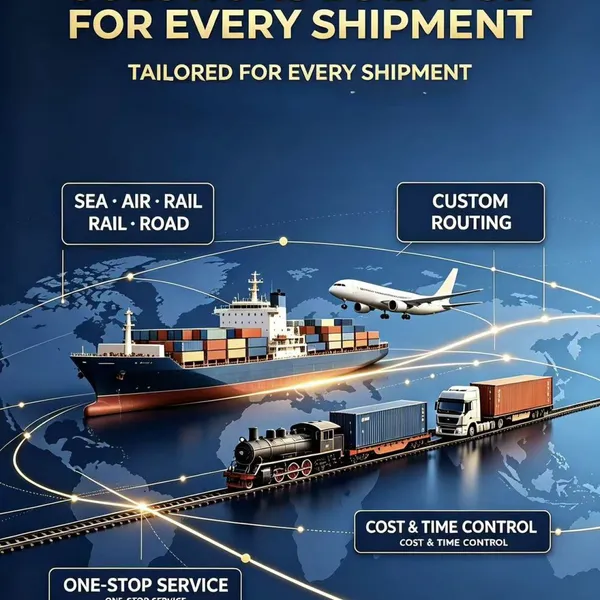 Read More
 -
The Current Status of International Transportation in The Middle-East Markert
September 8, 2026As local purchasers (importers) in the Middle East, core concerns lie in controllable shipping costs, stable lead‑times, cargo saf Read More

Contact Us
Recommended Products
-
 DOOR TO DOOR FROM GUANGZHOU /SHENZHEN TO DUBAI BY AIRNegotiableMOQ: 1 Unit
 -
Suitable & Fast Way By Car to IranNegotiableMOQ: 1 Unit
-
Get Easy for Ocean Freight to Middle-EastNegotiableMOQ: 1 Unit
-
CIF & FOB QUOTATIONNegotiableMOQ: 1 Case
-
AIR Cargos From China & Hongkong,ChinaNegotiableMOQ: 50 Kilograms